
Most people never think about what’s happening behind their walls. We flip a switch, plug in a charger, power up a computer, and just expect everything to work. And most of the time, it does. Quietly. Consistently. Without demanding attention.
But underneath that everyday convenience is an entire network of electrical infrastructure doing an incredible amount of work every single day.
What’s interesting is how invisible good electrical work tends to be. You rarely walk into a building and compliment the power distribution or notice how neatly cables were installed. Yet when something goes wrong — flickering lights, overloaded circuits, sudden outages — it immediately becomes everyone’s problem.
That contrast says a lot about how important reliable electrical systems really are.
Modern Buildings Depend on More Electricity Than Ever
A typical home or commercial space today uses significantly more power than buildings from twenty or thirty years ago were originally designed to handle.
Think about how many devices surround us now. Laptops, security systems, smart TVs, servers, air conditioning units, industrial equipment, kitchen appliances, chargers everywhere — sometimes all running simultaneously. Businesses especially place enormous demand on their electrical infrastructure without always realising it.
And while technology has improved dramatically, older buildings don’t magically upgrade themselves.
That’s why professional electrical planning matters more now than it probably ever has before. Systems need to be capable of handling current demand while also preparing for future expansion.
The challenge is that electrical wear often develops slowly and quietly. Problems usually don’t appear overnight. Instead, they build over time through overloaded circuits, aging materials, poor installation practices, or neglected maintenance.
Why Proper Wiring Still Matters
People sometimes underestimate how much quality installation affects long-term performance.
Bad wiring doesn’t always fail immediately. In fact, poorly installed systems can continue functioning for years before serious issues appear. That’s part of what makes electrical problems tricky. A setup may technically “work” while still creating hidden inefficiencies or safety concerns behind the scenes.
Loose connections, undersized cables, or poorly planned layouts can gradually cause overheating, voltage drops, equipment strain, or repeated breaker trips. In commercial spaces, even small interruptions can become surprisingly expensive.
I once spoke with a small business owner whose office experienced random computer shutdowns for months. Staff blamed outdated laptops until an electrician discovered unstable voltage caused by overloaded circuits in one section of the building. Fixing the electrical issue solved problems everyone originally assumed were technology-related.
Sometimes the real problem sits deeper than people first expect.
The Role of Conduit Systems in Electrical Safety
One area many people never really notice is how cables are physically protected throughout a building.
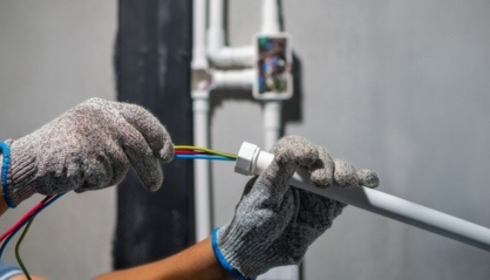
Properly installed conduit wires play an important role in shielding electrical cables from moisture, impact, corrosion, and general wear over time. In commercial and industrial environments especially, conduits help protect systems in areas exposed to movement, machinery, heat, or environmental stress.
Without proper protection, electrical cables become more vulnerable to damage that may not be visible right away.
And honestly, this is one of those behind-the-scenes details that separates temporary fixes from professional long-term work. Good electricians often think years ahead, not just about whether the system functions today.
That mindset matters because electrical infrastructure isn’t something most property owners want to replace repeatedly. Ideally, it should remain safe, stable, and dependable for a very long time.
Commercial Environments Come With Bigger Challenges
Commercial properties operate differently from residential spaces in almost every way.
Offices, restaurants, warehouses, retail stores, and industrial facilities typically run heavier electrical loads and more complicated systems overall. They also face stricter safety requirements and greater operational pressure if power problems occur.
That’s where experienced commercial electrical services become essential.
A brief outage in a family home is inconvenient. A brief outage in a restaurant kitchen during peak hours can damage stock, delay orders, frustrate customers, and cost real money almost instantly.
Commercial electricians often need to think beyond basic functionality. They’re considering efficiency, compliance, backup systems, energy demand, future scalability, and operational continuity all at once.
It’s a much broader responsibility than simply replacing outlets or installing lighting.
Energy Efficiency Has Become Part of the Conversation
Rising energy costs have changed how many people approach electrical upgrades.
Businesses especially are looking for smarter ways to reduce consumption without affecting productivity. Even homeowners are becoming more aware of how outdated systems quietly waste electricity in the background.
Modern electrical upgrades can improve efficiency in subtle but meaningful ways. Better load balancing, upgraded panels, LED systems, motion sensors, and smarter circuit layouts often reduce unnecessary strain on both equipment and energy usage.
And while saving money matters, reliability is becoming equally important.
Efficient systems tend to operate more consistently because components aren’t constantly being pushed beyond their ideal capacity. That usually means fewer disruptions, fewer repairs, and longer equipment lifespan overall.
Good Electrical Work Often Goes Unnoticed — And That’s the Point
There’s something strangely satisfying about infrastructure that simply does its job without attention.
When electrical systems are installed properly, maintained carefully, and designed thoughtfully, most people never stop to think about them. Life just continues normally. Businesses keep operating. Homes stay comfortable. Equipment works the way it should.
And maybe that quiet reliability is what makes good electrical work so valuable in the first place.
Because when the power stays stable, the lights stay on, and everything functions smoothly in the background, people are free to focus on the things that actually matter to them.
Which, in the end, is probably exactly how it’s supposed to be.